

A refrigerator that quits cooling is one of the few appliance problems on a clock. A handful of quick checks you can run yourself, but most of the real causes need a tech. Here’s the order we work through it, whether you’ve got an LG, a Samsung, a Whirlpool, or a GE.
This is the brand-agnostic version. If you own an LG, we’ve got a deeper writeup on the faults that brand throws most.
First: the four things that aren’t actually broken
Most “not cooling” calls that turn out cheap come down to one of these. Check them first.
-
Power and the dial. Confirm the unit has power at the outlet, not a tripped GFCI or a half-seated plug. Then check the temperature dial. A bumped thermostat or a kid turning a knob happens more than you’d think. Fridge should read 37 to 40°F, freezer at 0°F.
-
Vacation, demo, or showroom mode. Lots of newer fridges have a display mode that shuts cooling off. If the panel shows “OFF,” “demo,” or a store-display icon, hold the mode buttons per the manual to exit. This five-minute fix gets mistaken for a dead fridge constantly.
-
An overpacked interior. Cold air has to circulate. Cram the fridge full and block the rear vents and the air can’t move, so it reads warm. Pull items off the back wall and the vents, give it a day.
-
A door that isn’t sealing. A gasket pulled loose, or a jar propping the door open overnight, bleeds cold and runs the compressor nonstop. Run a dollar bill across the seal. Slides out with no drag anywhere? The gasket needs replacing.
None of those? The cause is mechanical. Keep the door shut and read on.
Then: the five real failures, cheapest to worst
-
Dirty condenser coils. The coils shed heat. Packed with dust, the fridge runs constant and still drifts warm. We clean them on every diagnostic, and it’s worth doing every 6 to 12 months yourself.
-
A dead condenser fan. That fan pulls air across the coils. When the motor seizes, the unit can’t shed heat. You’ll often hear it: silence where there should be a low whir, or a compressor hot to the touch that never cycles off.
-
A failed evaporator fan. The fan inside, behind the freezer panel, that pushes cold air up to the fridge. When it dies, the freezer stays cold and the fridge goes warm. It’s the single most common reason for a cold-freezer, warm-fridge split.
-
A defrost fault or a frosted coil. If the defrost heater, timer, or sensor fails, the evaporator coil ices into a solid block and air can’t move through it. The tell: a fridge that worked, quit, and now has frost building behind the freezer panel.
-
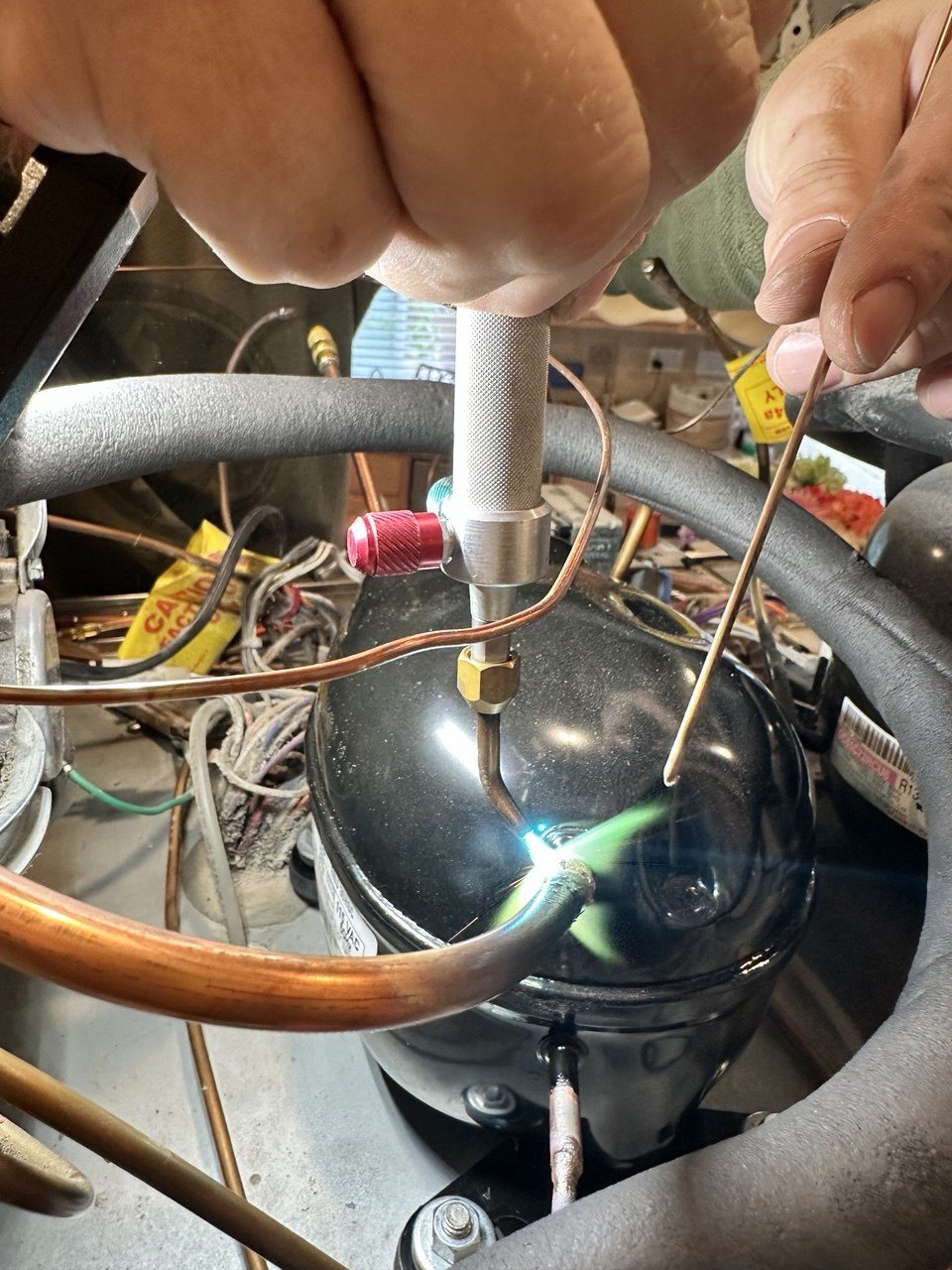
A control board or sealed-system failure. A main control board can stop commanding the compressor. And at the worst end, a sealed-system refrigerant leak means the unit never reaches temperature no matter how hard it runs. Both need a tech, and the sealed system specifically needs EPA-certified handling, never a DIY recharge.
When to stop and call a pro
Call when the freezer’s cold but the fridge is warm, when frost is building behind the freezer panel, when the compressor is hot and never shuts off, or when the simple checks above did nothing after 24 hours. Those point at fans, defrost, the board, or the sealed system, and they need gauges and parts.
Bay Area Appliance Repair Service has serviced fridges since 2021. We’re licensed (CSLB #1136642), EPA-certified for sealed-system work (#1279674151528), BEAR-registered, and A+ with the BBB. The diagnostic is $75, credited to the repair if you go ahead, and you get the price before any wrench work. See our refrigeration repair service or the full refrigerator repair guide.
Fridge down and food on the line? Call (925) 999-4095 or email [email protected]. We cover the Bay Area, often same or next day.
What a sealed-system repair looks like
FAQ
Why is my fridge not cooling but the freezer still works? Almost always airflow or defrost, not the compressor. A dead evaporator fan, a frosted-over coil from a defrost fault, or a stuck air damper keeps the freezer cold while the fridge goes warm.
Can dirty coils really stop a fridge from cooling? Yes, one of the most common causes. Dusty condenser coils trap heat, so the unit runs nonstop and still drifts warm. We clean them on every diagnostic.
How long should I wait before deciding it’s broken? Give it 24 hours with the door shut after any adjustment. A fridge that lost its cold needs most of a day to recover.
Can I recharge the refrigerant myself? No. A sealed-system leak needs EPA-certified gauges, vacuum, and recharge. A DIY can won’t fix a leak and is illegal to vent.